
Beyond Gift Cards: Why Spend-Anywhere Rewards Belong in Employee Recognition
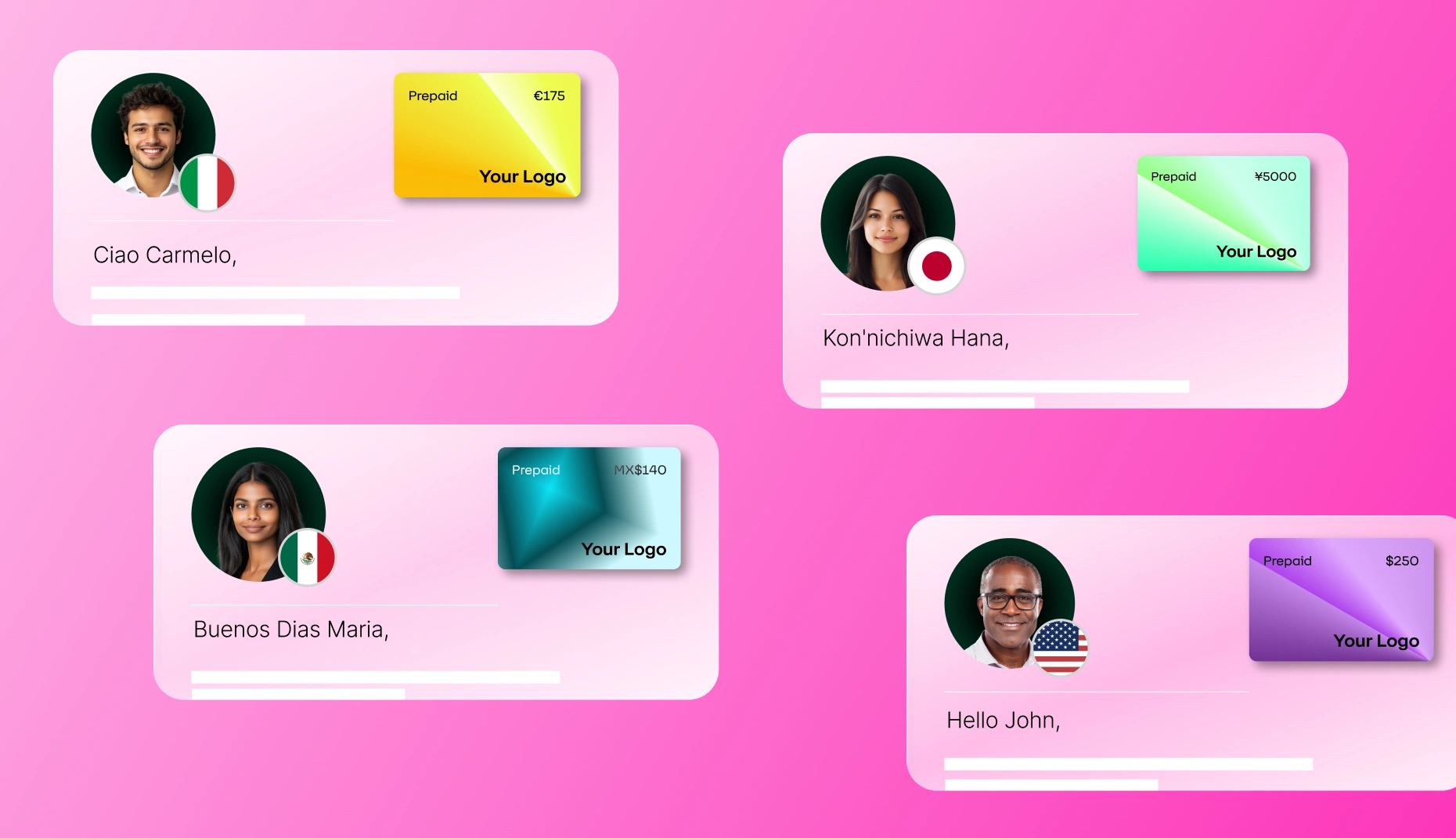
Only 10% of employees say their organization has ever asked them how they want to be recognized. The recognition moment is designed for the recipient. The reward, mostly, isn’t.
That mismatch is the thing employee engagement platforms haven’t fully solved. Not because gift cards are broken, but because the catalog model that defined the last decade of digital rewards is hitting a ceiling that adding more brands can’t push through.
This matters because recognition is not a soft-side feature with no business consequence. Gallup research found that well-recognized employees were 45% less likely to quit after two years.
The catalog ceiling
For most of the last decade, engagement platforms competed on catalog size. More brands, more categories, more options. The logic was straightforward: more choice equals better experience. And it worked, until it didn’t.
The catalogs have converged. Across many major reward catalogs, the same recognizable brands show up again and again, which means a recipient choosing rewards through Platform A and a recipient choosing through Platform B are looking at nearly the same list. Going from 500 brands to 1,500 sounds like a competitive moat in a sales deck, but usage data tells a flatter story. A small set of popular brands accounts for most redemptions, and the long tail mostly reassures buyers rather than getting used.
The deeper issue is that curated choice is still constrained choice. Every local restaurant, independent shop, online subscription, and grocery run that isn’t in the catalog is a place the reward can’t go. When you push the boundary of choice out from 200 brands to 2,000, you’ve widened the box. You haven’t removed it.
What employees actually want when they get recognized
Talk to the people receiving rewards, not the people buying the platforms, and two words come up again and again: choice and immediacy. They want the reward to arrive while the recognition still feels real, and they want to use it on something that matters to them, not something that matters to a catalog.
This isn’t a generational preference or a fintech-curiosity story. It’s the carry-over from every other digital payment experience employees have. People pay with their phone at the coffee shop, split a dinner bill instantly, and move money between accounts in seconds. When the reward for being recognized at work is a process (open the email, navigate to the portal, browse brands, pick a code, copy-paste it at checkout) it lands as a small step backward.
Spend-anywhere digital prepaid Visa cards close that gap without replacing what already works. The recipient gets a digital card delivered through the engagement platform, claims it, and spends it wherever Visa is accepted. No catalog to browse. No retailer mismatch to manage around. The recognition moment runs straight into a reward the recipient controls.
That doesn’t make gift cards obsolete. A specific gift card is sometimes exactly the right reward. The curated, branded experience has real appeal, especially for higher-value milestones or seasonal moments where the brand itself is part of the gift. The point isn’t to replace one with the other. It’s to give recipients both, and let the moment decide which one fits.
The honest objection, and why it falls apart
The fair pushback at this point is: adding another reward type means adding another vendor, another integration, another reconciliation flow, another support contract. The gift card setup works. The complexity isn’t worth the marginal employee benefit.
That objection is real when it’s true. And historically it has been true. Most platforms that added prepaid cards to their reward mix did it through a separate provider, with a separate API and a separate operational footprint. The reward catalog got broader. The engineering team’s surface area got heavier. The program admin ended up toggling between two dashboards.
But that’s a function of how the reward stack was built, not a function of what’s possible now. The infrastructure exists to deliver both gift cards and spend-anywhere prepaid Visa cards through one integration: the same API, the same dashboard, the same payout flow. When the two reward types share infrastructure, the complexity argument doesn’t survive. You add a reward modality, not a vendor.
That’s the design choice underneath this whole conversation. The question isn’t really should we add prepaid cards? It’s does our reward infrastructure let us expand recipient choice without expanding vendor count? If the answer is yes, the addition is a focused product decision. If the answer is no, the addition genuinely is a tax on the roadmap, and the objection holds.
Recognition is emotional. The reward is where the emotion lands.
The reason any of this matters isn’t operational. It’s that recognition is the most emotionally loaded moment an engagement platform delivers, and the reward is where that emotion either lands cleanly or leaks away.
A gift card to a retailer the recipient never visits is a small leak. A reward they have to work to use is a slightly bigger one. A reward catalog that hasn’t materially changed in five years while everything else in the recipient’s payment life has gotten faster, more flexible, and more digital: that’s a structural one.
The strongest employee engagement platforms over the next few years won’t be the ones with the biggest catalogs. They’ll be the ones that treat the reward experience as a product surface in its own right, with the same design rigor they apply to the rest of the platform. Spend-anywhere prepaid cards aren’t the only piece of that, but they’re one of the most concrete moves available, and one of the few that can’t be neutralized by simply adding another row of familiar gift card logos.
Gift cards stay in the toolkit. The toolkit just gets bigger.
Talk to a Runa payout expert about how we support both gift cards and Runa Reward Cards, Visa-powered prepaid cards delivered digitally, through a single integration.